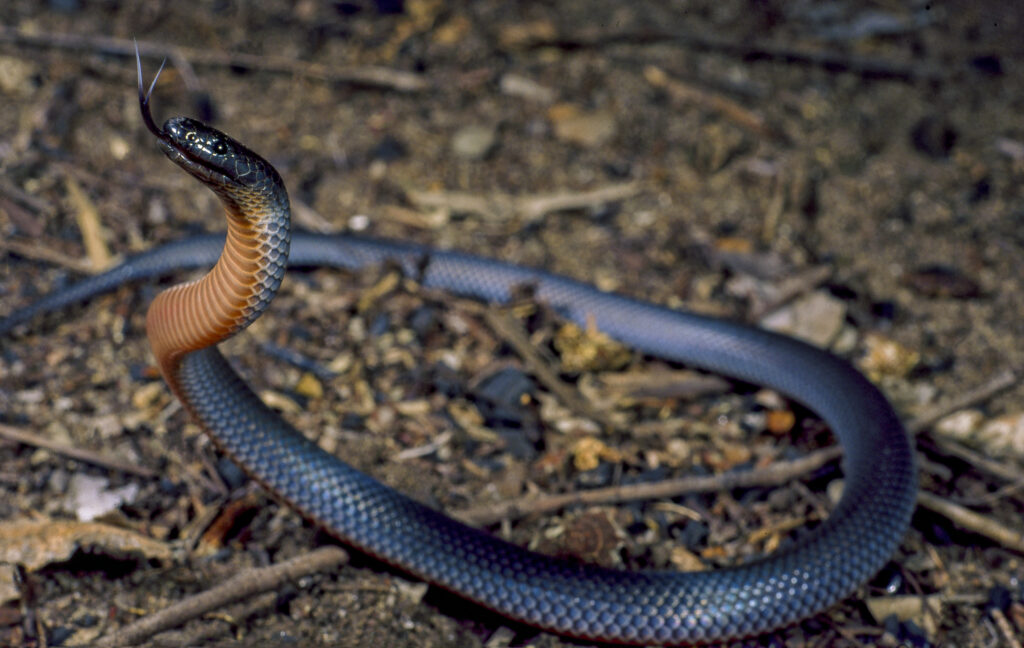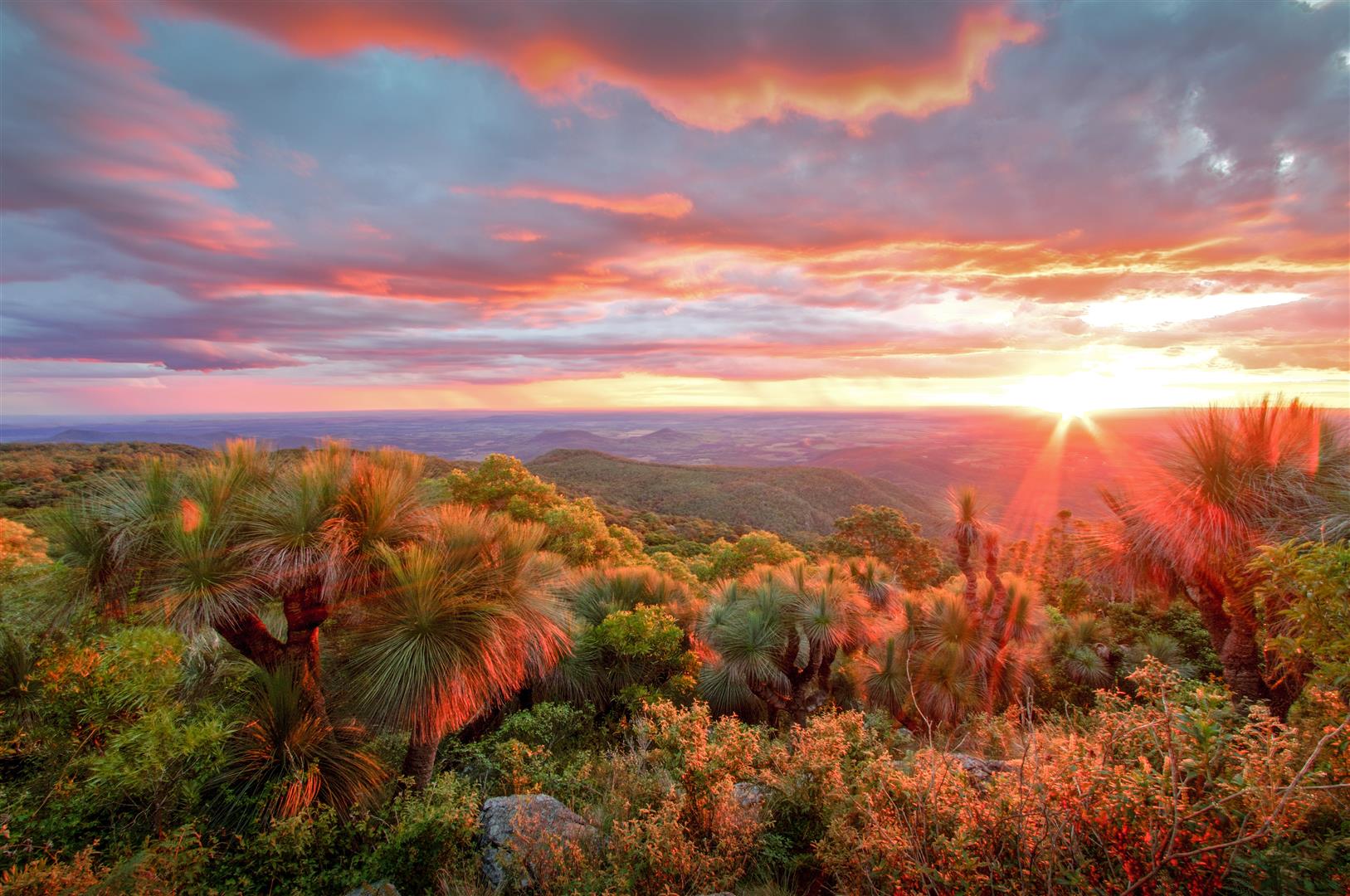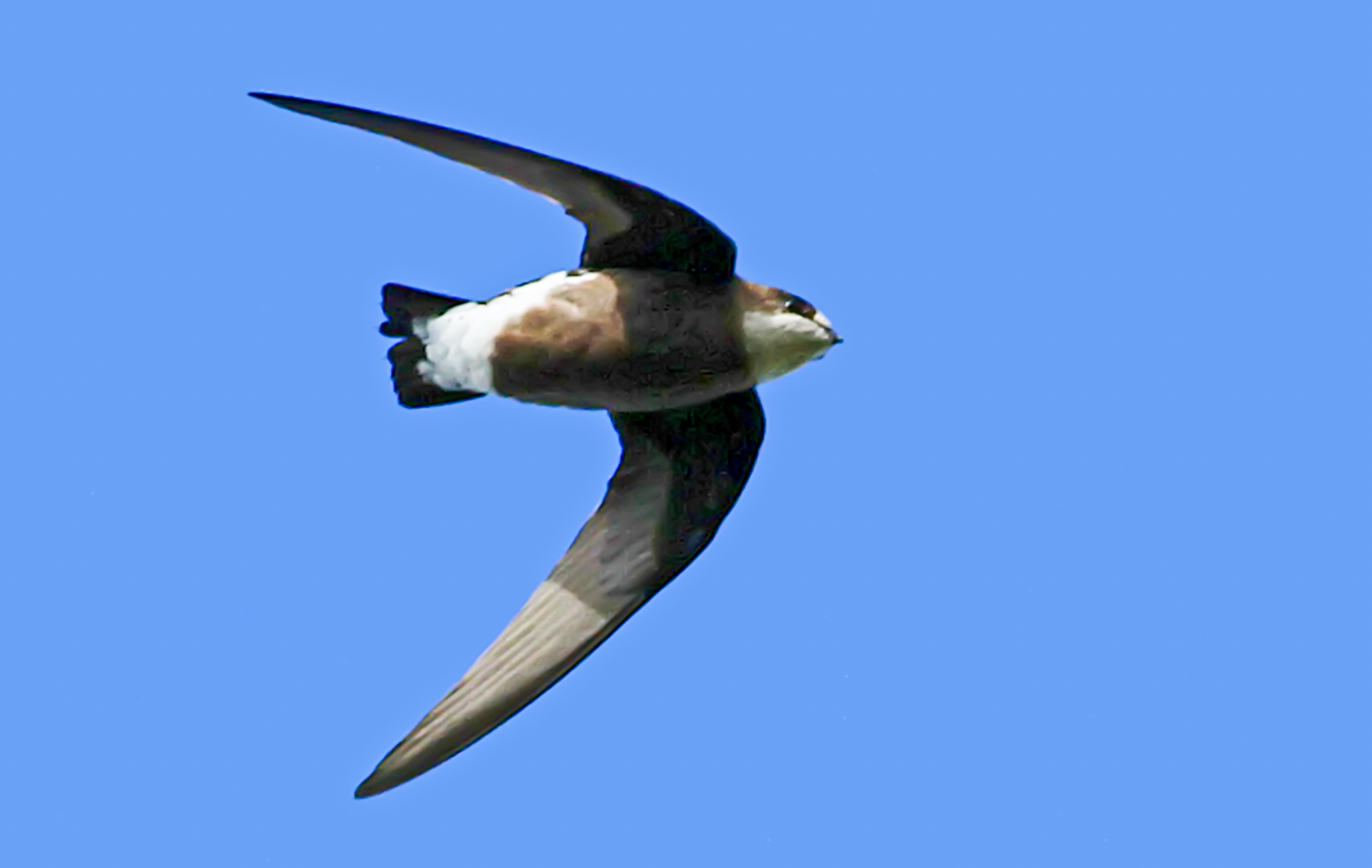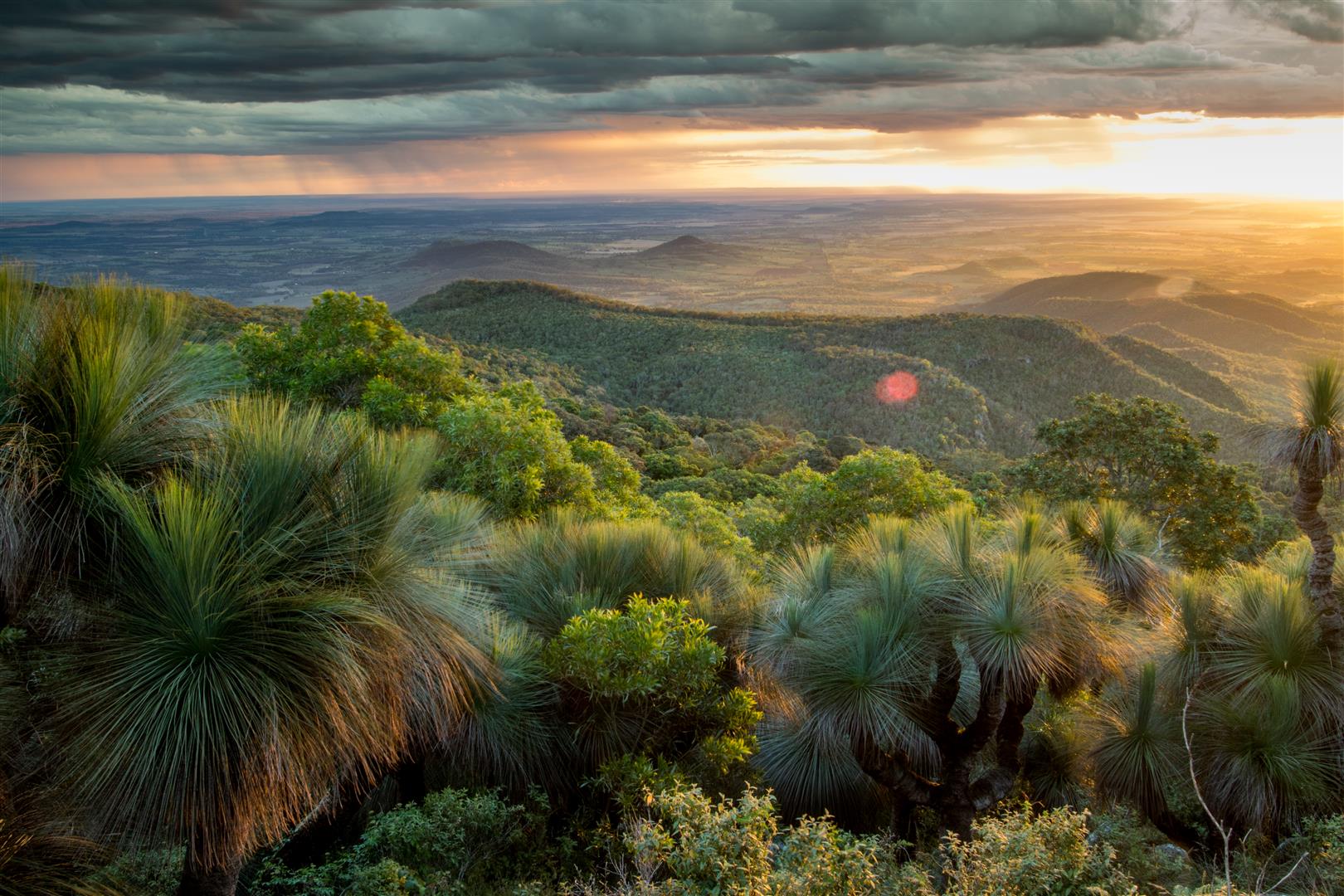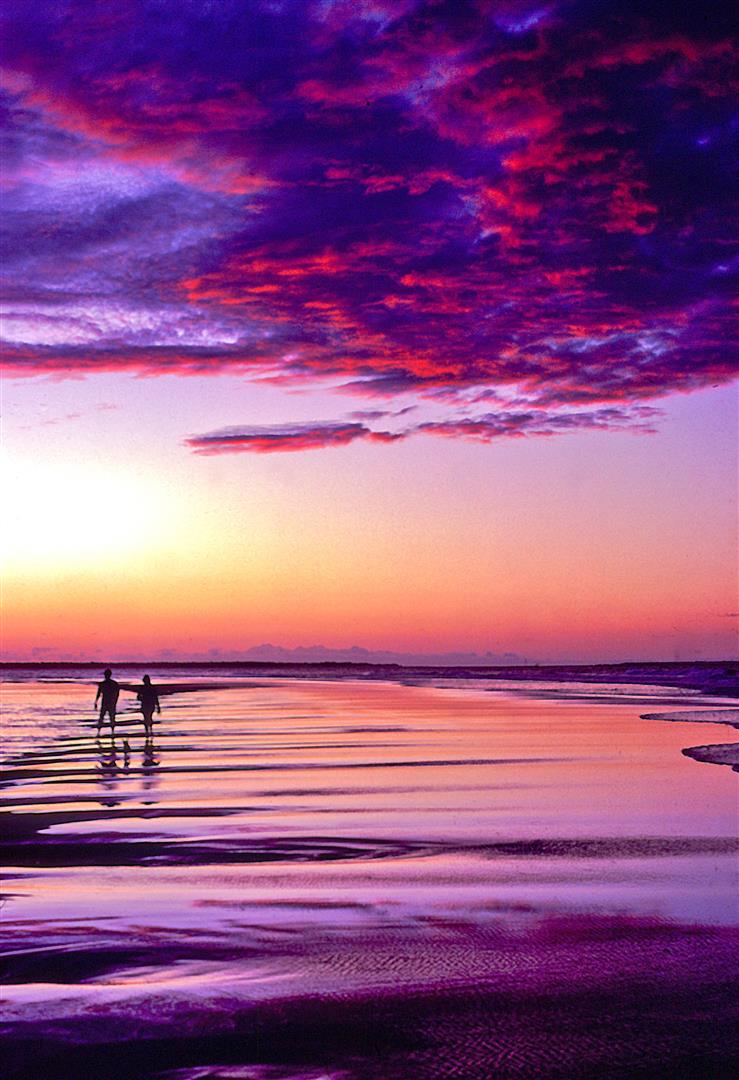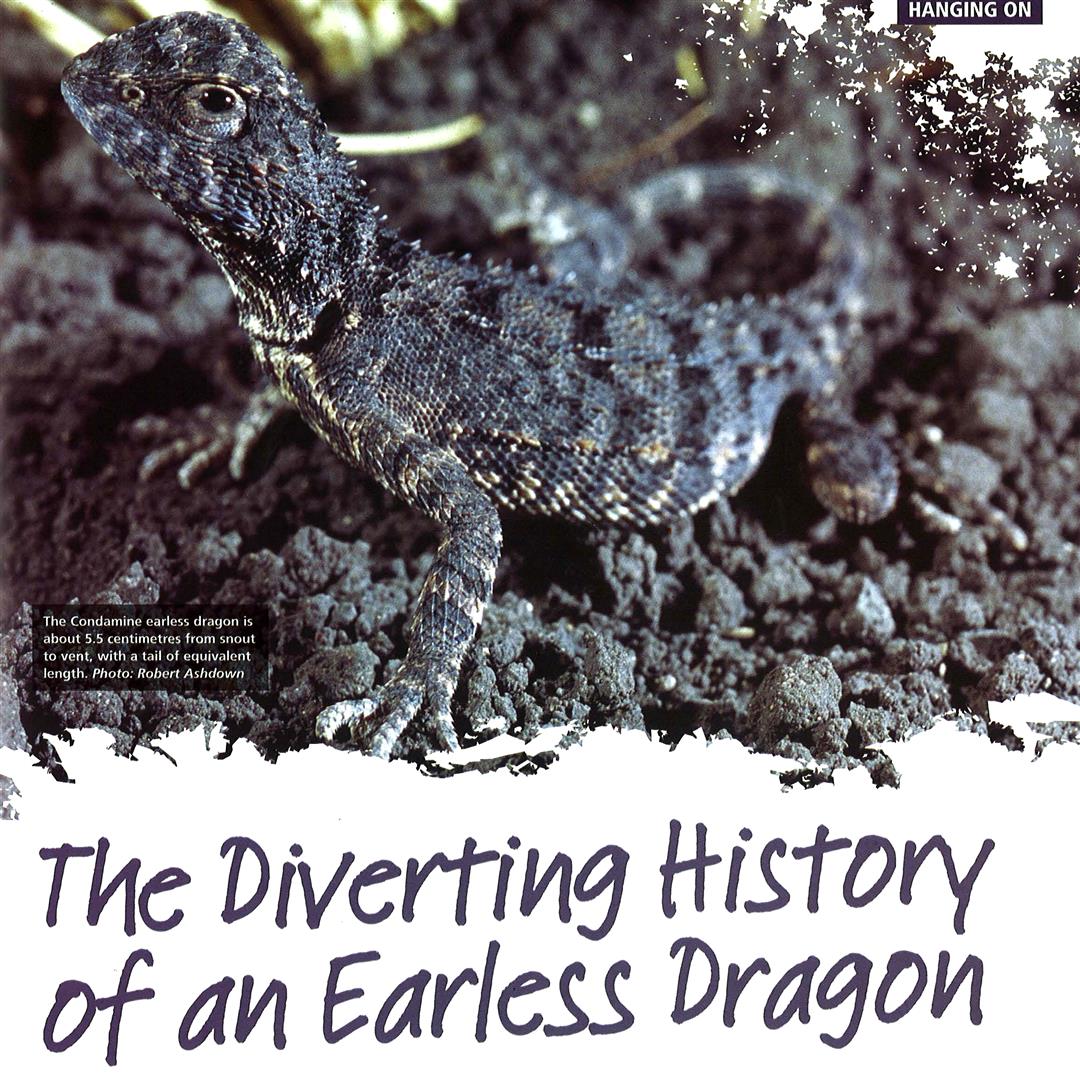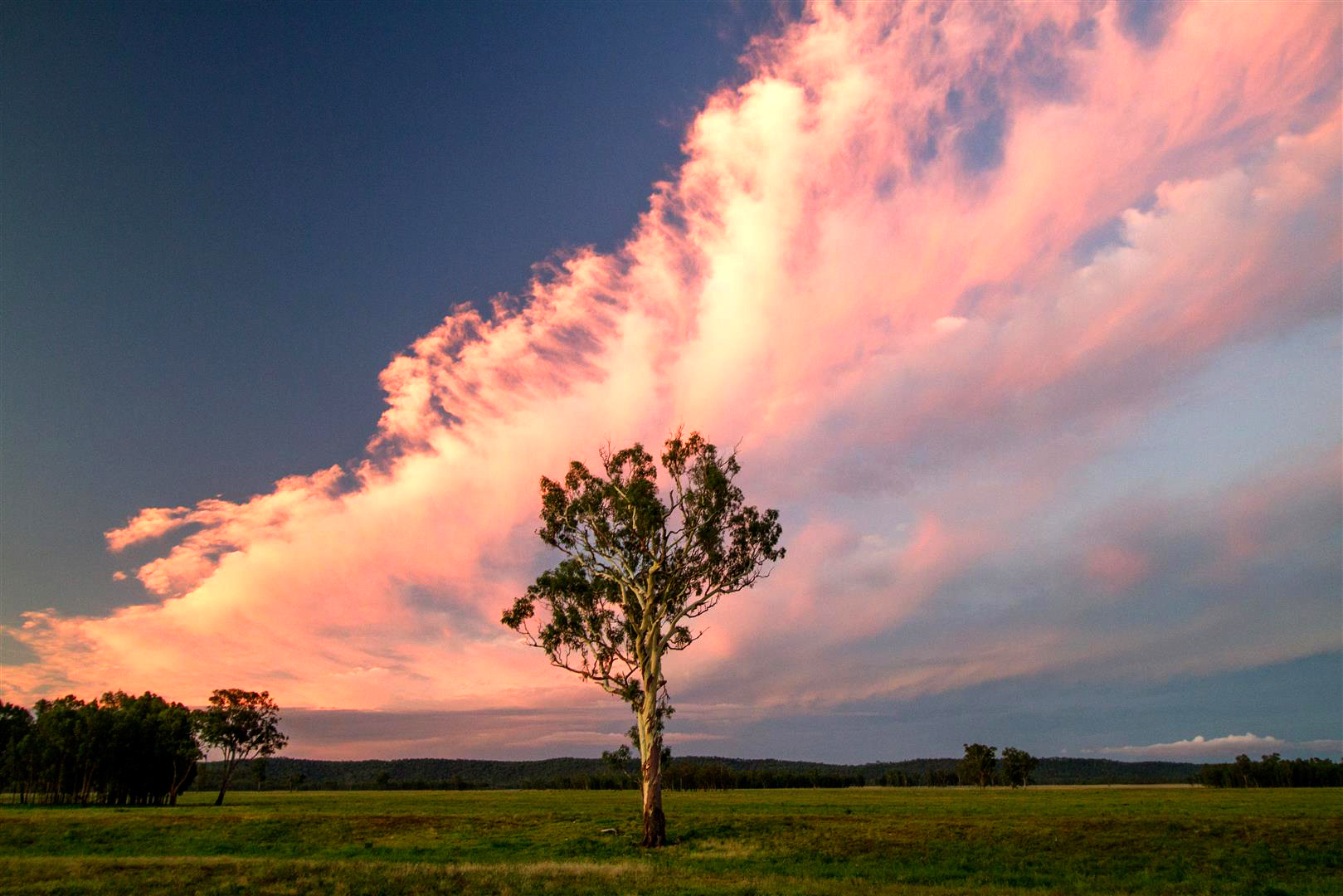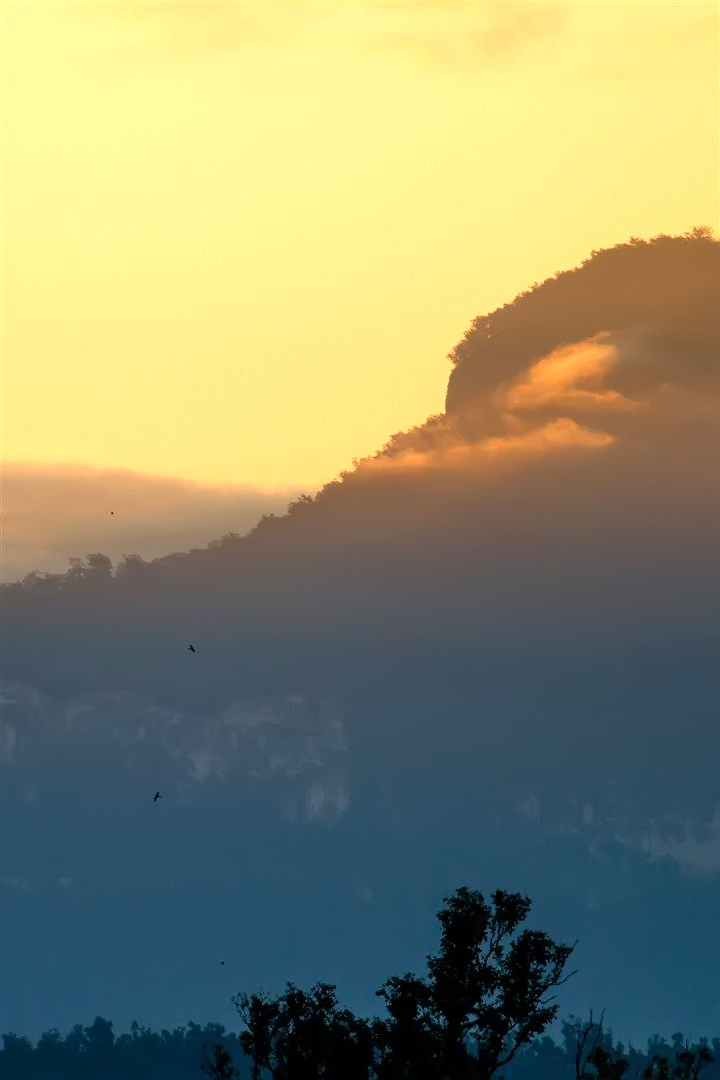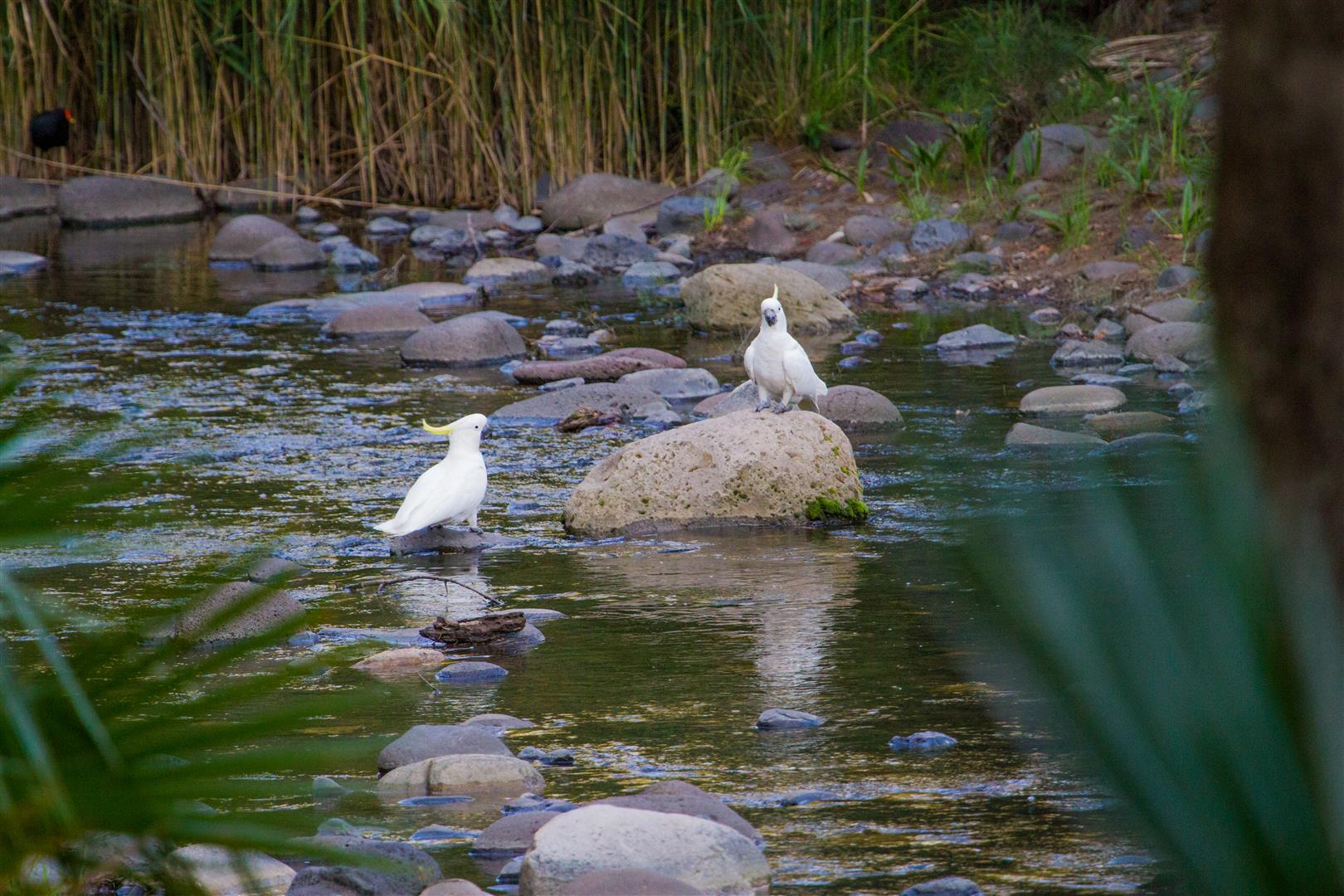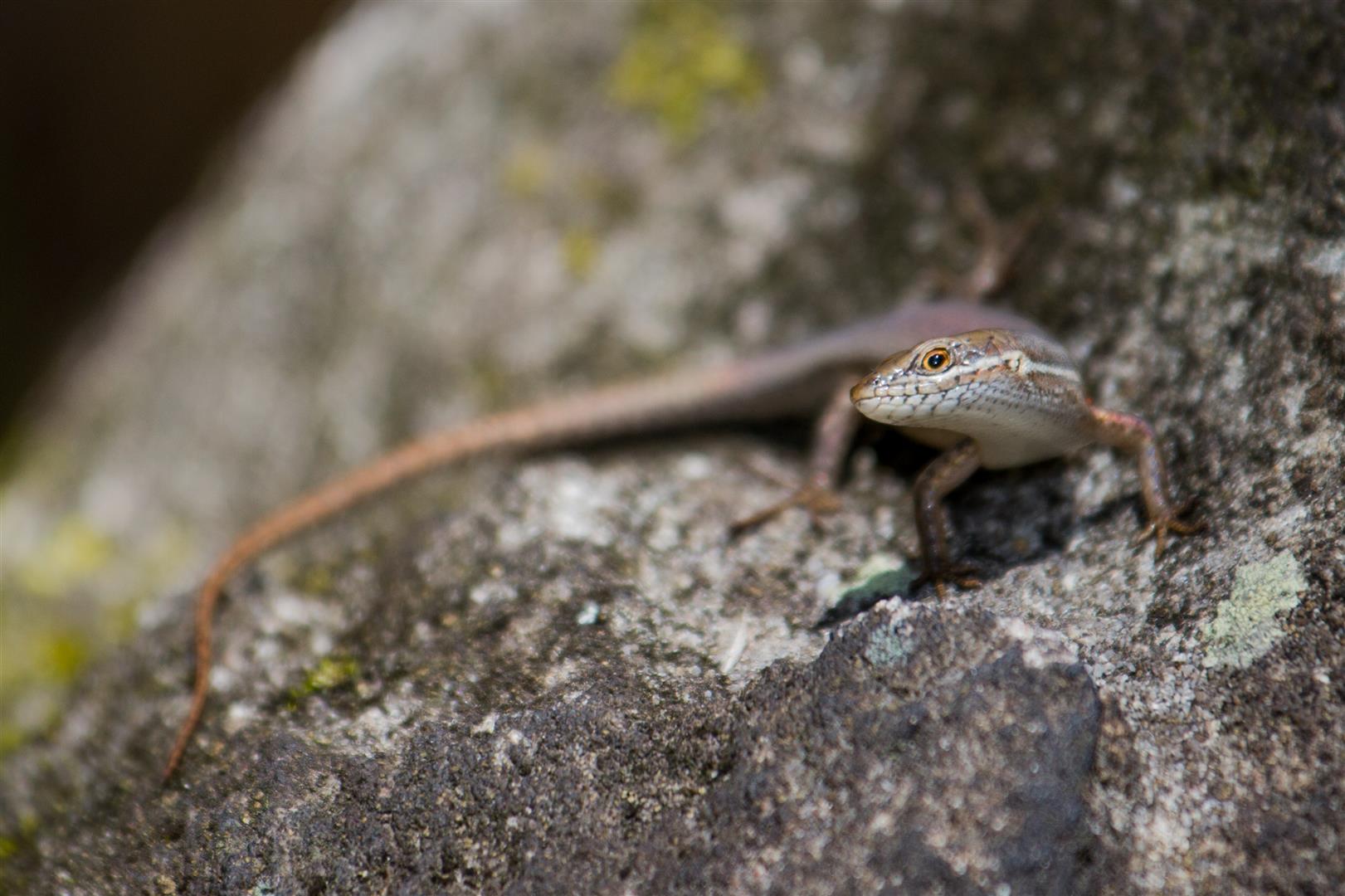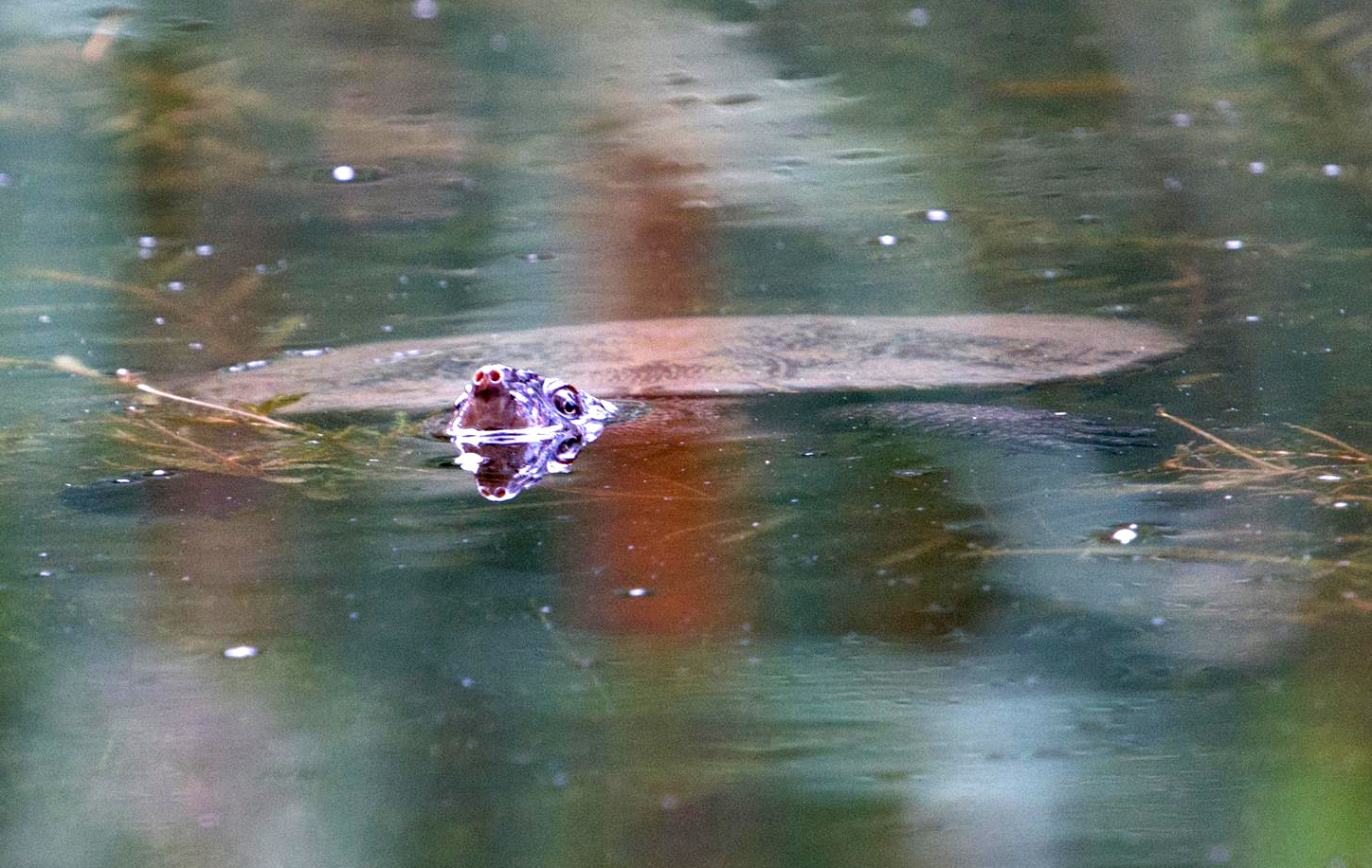
Brolga courtship, Arcadia Valley. [Click on images for larger view]
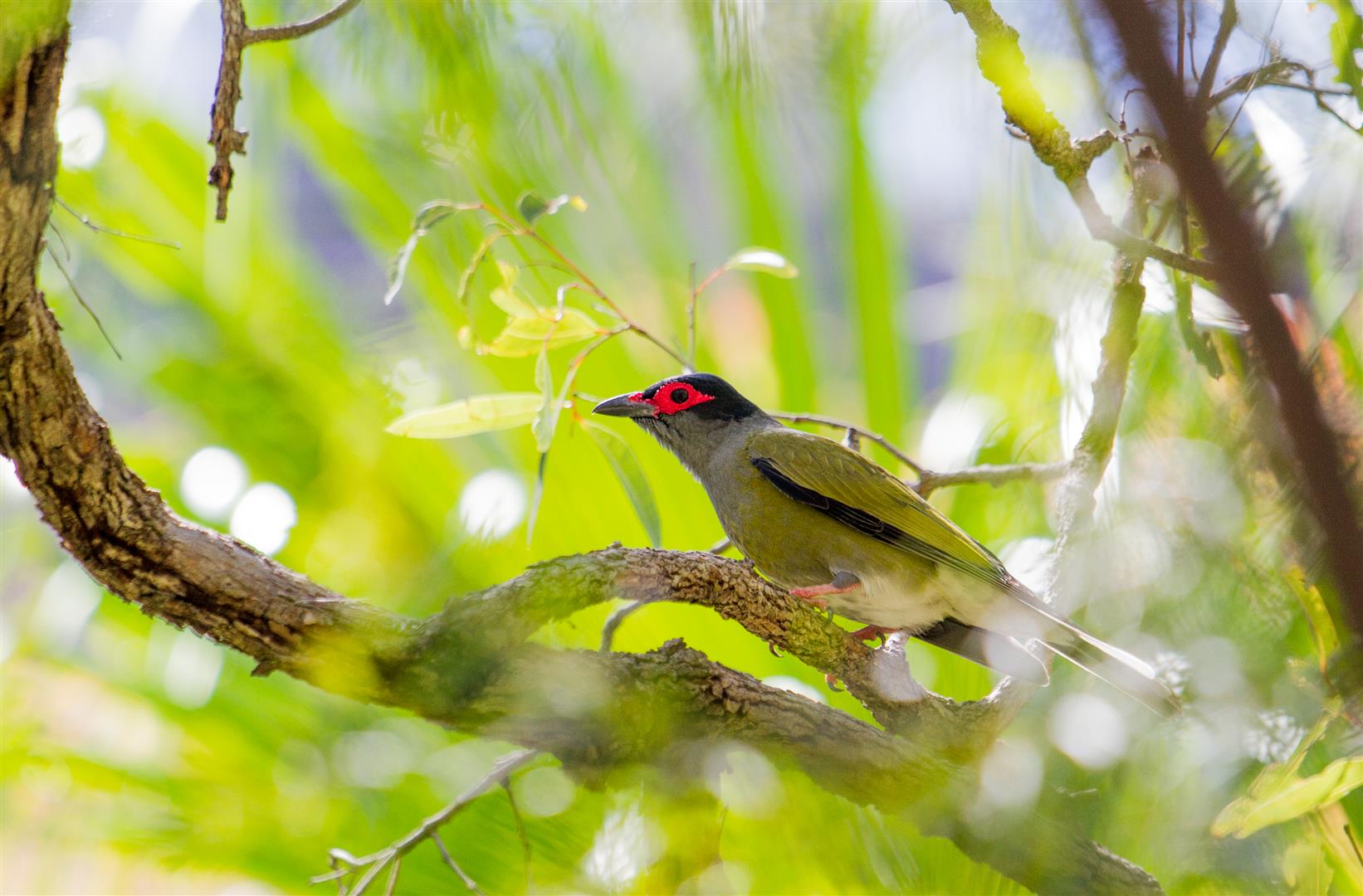
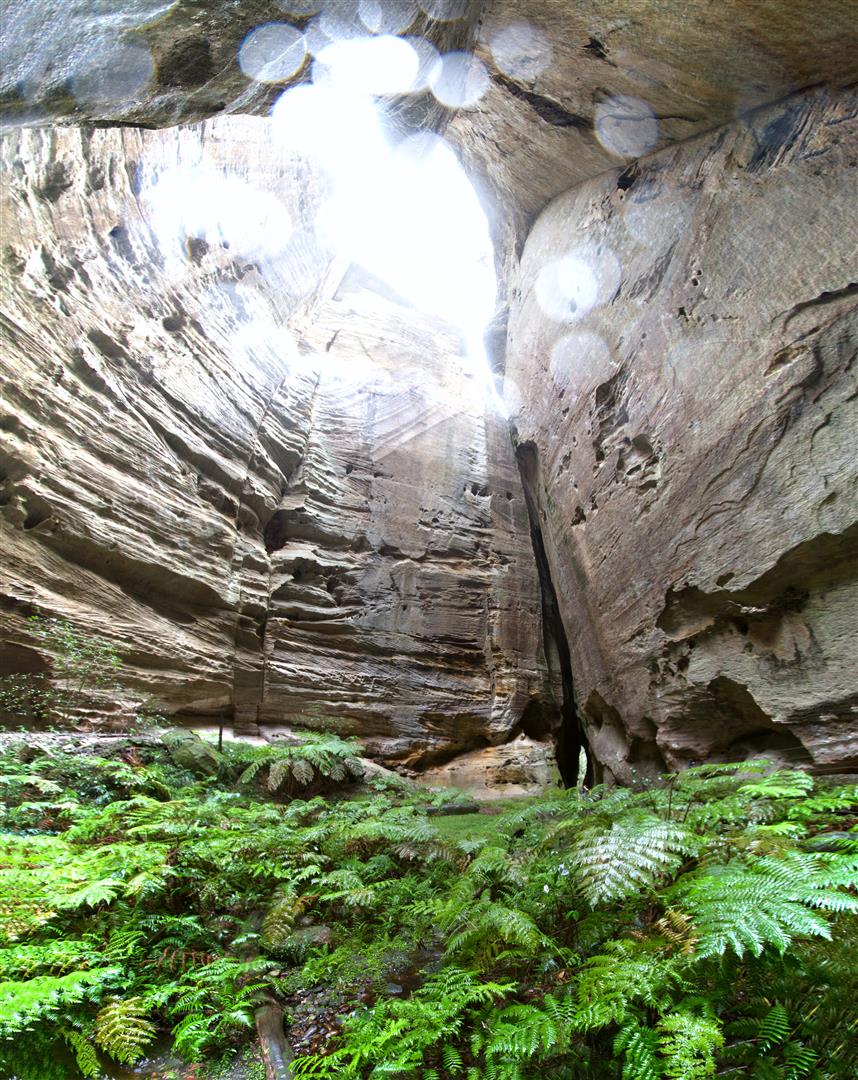
A recent work trip to the central Queensland sandstone country provided some great opportunities for bird photography, although much was done on the road in a bit of a rush getting from one spot to another.
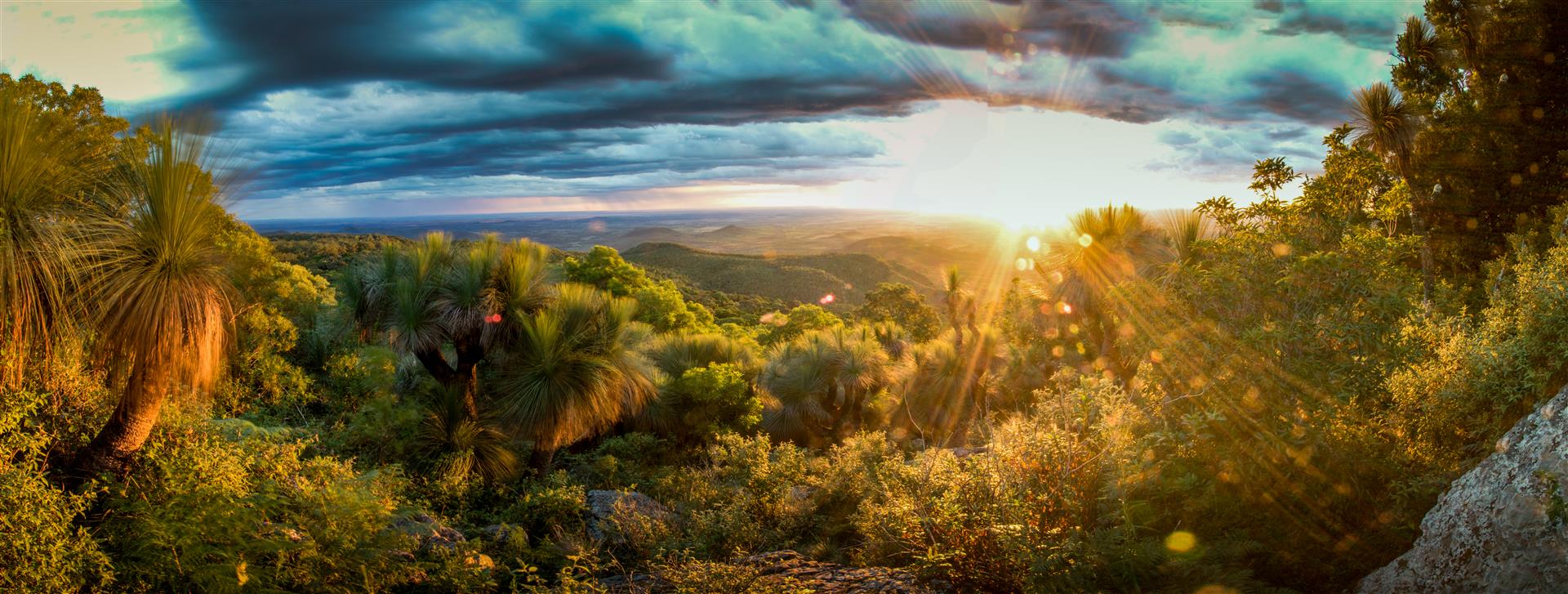
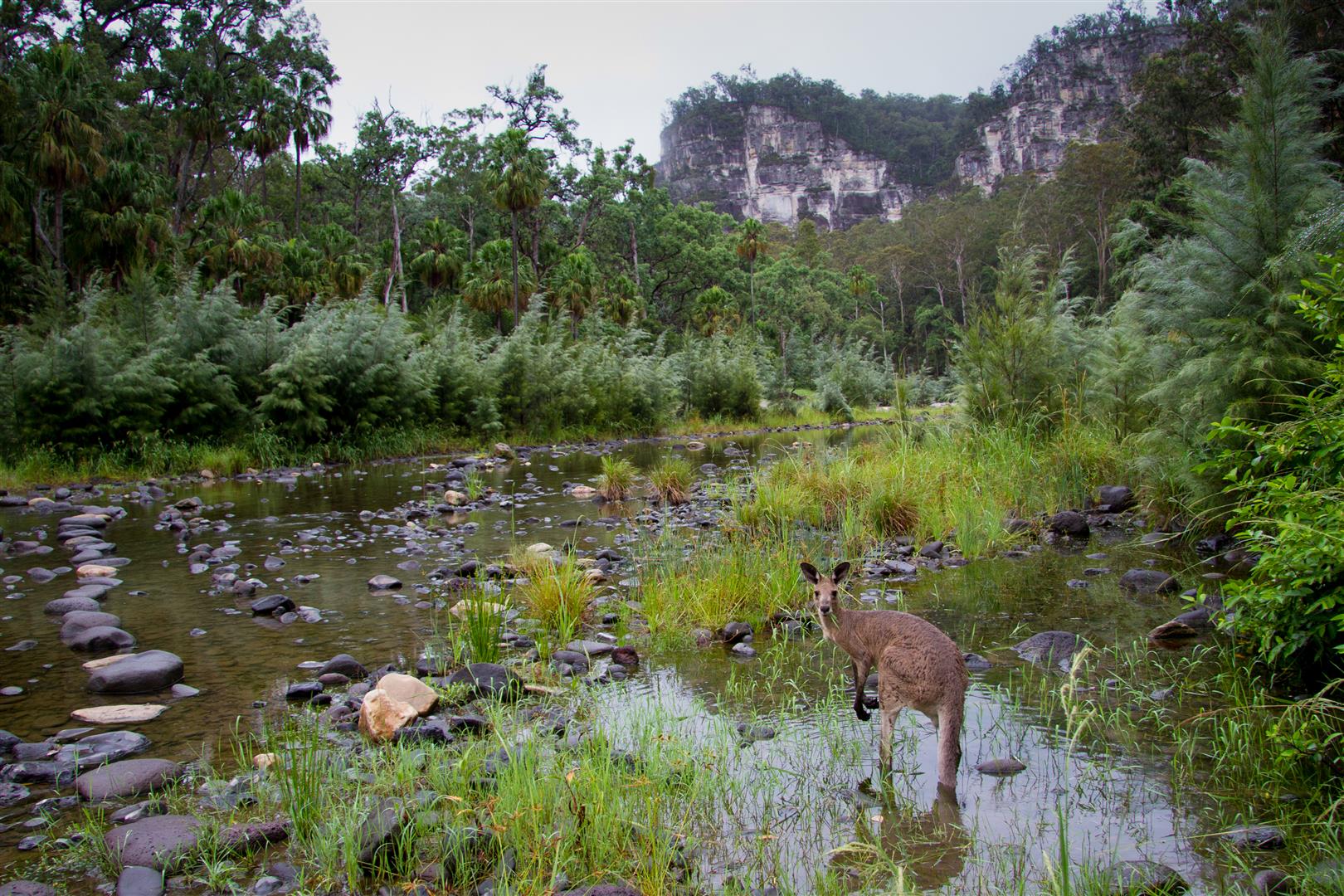
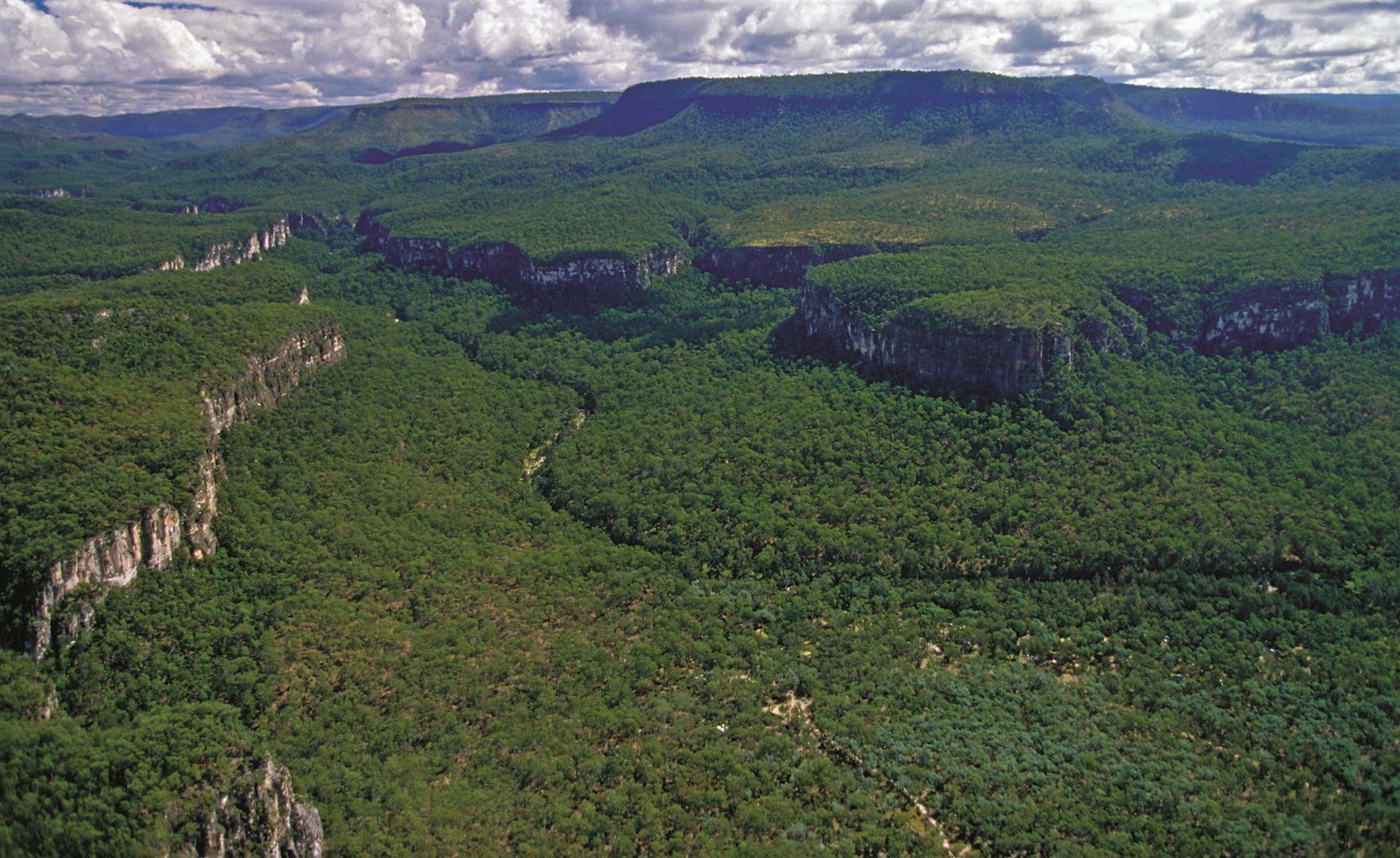
Arcadia Valley is between Injune and Rolleston. The brigalow scrub that once covered this area is now largely restricted to Lonesome National Park at the southern end of the valley. Vast fields of sorghum stretched off to distant sandstone escarpments as I drove south in the late afternoon light.
I’ve always loved spotting Red-winged Parrots (Aprosmictus erythropterus), and stopped to watch a small flock of these dazzling birds raiding the grain as long shadows crept across the fields.
Perched uncomfortably in a grey mangrove tree, I was being eaten alive by sand-flies. I was coping with this, however, as I’d just caught a glimpse of my favourite bird.
I sat as still as possible, peering intently into the tangle of foliage on the opposite bank of this small, mangrove-lined creek on the outskirts of Brisbane. A pale grey, ghostly shape had just glided through a gap in the canopy, and the place had fallen silent — not a sound from the other mangrove birds that had been piping away seconds before. The place was tense. A predator was looking for a meal, and all were wary.
Grey Goshawk, Boondall wetlands, Brisbane. Grey Goshawks frequent most forest types, especially tall closed forests (including rainforests) in the coastal areas of northern and eastern Australia. They feed on birds, small mammals, reptiles and insects, capturing prey by striking with their long, powerful clawed toes. They pursue prey in flight, striking at speed, and even chasing prey into dense undergrowth.
All photographs courtesy, and copyright, Mike Peisley.
My first close encounter with a Grey Goshawk in my local patch of bushland, years earlier, had really sparked my enthusiasm for raptors — our birds of prey. I’d stopped in my tracks to meet the steady, but wary, gaze of this impressive bird as it perched on the end of a eucalypt limb above the walking track, black eyes stark against pale grey feathers. Having seen these birds occasionally from a distance on the edges of distant rainforest, I was stunned to be face-to-face with one in this patch of bush where the suburbs meet Moreton Bay. The bird had quickly and silently taken off, leaving me hooked.
Like many other bird-watchers before me I took a deeper plunge into the addictive world of raptor identification — a pastime equal parts frustration and excitement. What was this raptor doing here in Brisbane, and what others might be around? With fellow local birdwatchers over the next few years, I’d pursued some answers to these questions, and found many raptors hanging out locally. Our finds included Brown and Grey Goshawks; Collared Sparrow-hawks; Pacific Bazas; Brahminy, Whistling and Black-shouldered Kites — and even White-bellied Sea Eagles — all nesting in the area. We soon realised just how important these habitats were for our birds of prey.
Many years later, I still find raptors exciting to watch. Living on the Darling Downs, I’ve seen Spotted Harriers gliding over fields, Brown Falcons flapping about a clear blue sky, and Peregrine Falcons nesting on the cliffs of old quarries. Yet my favourite bird remains the Grey Goshawk, with whom my encounters are still rare and always thrilling. I’ve spotted one gliding over Queens Park in the middle of Toowoomba, and one day near Ravensbourne stood transfixed as a white phase morph of the species (the only pure white raptor in the world) glided past. That was one of the highlights of my life as a naturalist.


A naturalist? I remember telling a colleague that I was one of these, to which I received the shocked response, “You’re into running around with no clothes on?” It seems that being a naturalist (as opposed to a naturist, or nudist), is a pastime little known these days, and certainly less popular than watching football (and possibly running around nude). But it’s a long tradition, and a good-value hobby. Watching the natural world brings endless rewards. Part of the tradition is of course the sometimes obsessive need to impose order on what we see, to collect and categorise. Where once our predecessors kept bird eggs and cabinets of specimens, we keep notes, tick lists, make sketches and take photographs. And, of course, we share stories of what we’ve seen, which seems to close the loop on the enjoyable process of watching wildlife. I think it is the mystery and challenge, and the encounters with wonderful wild creatures, that make being a naturalist so rewarding.
Raptors are a great reminder of the mystery inherent in nature. Despite our technology we can’t just whistle them up, and identification (let alone an understanding of behaviour) takes dedication and skill. Long persecuted as predators that take our chickens or lambs, their ability to survive around us — largely unnoticed and given the chaos we wreak on habitats — is admirable.
As I sat in the mangroves that day, I was holding my breath. No doubt this mere glimpse would be all I’d get once more. But I was in luck, as a large female Grey Goshawk emerged from the tree line and glided right past me. My hands were shaking so much I could barely hold the binoculars still. Locking them briefly onto the bird’s face, I once more met the fierce and intelligent gaze of this most striking bird, before it was gone — as silently and as quickly as it had appeared.
I went home itchy, clothed and happy.
Herpetologist, author and photographer Mike Swan has been on the road taking photographs for a new field guide to the frogs of Australia. He’s given me permission to share a few images taken during a recent trip to far northern Queensland.
I’ll post more about this book down the track. See here for more information on Mike’s publishing business.
“I met Warren Zevon in Emerald,” said Martin Ambrose, Senior Ranger in the Queensland Parks and Wildlife Service, as we drove along some dodgy road near Injune. Tracks from the classic 1978 Zevon album Excitable Boy had been blasting out of the speakers for a quite a few kilometres.
I’d discovered that Ambrose and I shared an appreciation of the music of the late Zevon, but this was a bit hard to believe. Zevon, the hard-rocking American singer-songwriter, known for his sardonic humour, brilliant musicianship and heavy partying, hanging out in central Queensland? “I require evidence,” was my response. It appeared a few days later, in the form of this great photograph.

Send lawyers, guns, money … and newly-planted trees. Warren Zevon (holding pick like it’s a hunting rifle) with Forestry Officers Martin Ambrose (left) and Craig Whiteford (right). Photograph by Fred Wild.
In his blog page on Zevon, ‘Nu Country guru’ Dave Dawson states, “When Chicago-born singer-songwriter Warren Zevon first toured Australia with (well-known Aussie outfit) The Little River Band in 1990 he soaked up Aussie culture from the shade of the Hilton circuit.” Zevon played 23 gigs that year in a tour that visited Melbourne, Sydney, Adelaide and Perth. Tour lists do not mention that Zevon had briefly ventured off the coastal strip, accompanying The Little River Band when they visited Emerald to play at a charity concert following the big flood of that year. Zevon played two songs at the concert, which was held at the football grounds.
Martin relates how Zevon had earlier in the day planted a tree in the car park — a temporary location for the publicity photo shoot with the Queensland Forestry Department (who Martin them worked for) and Central Queensland News. “Forestry was seeking coverage for the Natureline, a corridor of trees being planted around the town of Emerald to reduce spray drift from cotton spraying around the margins of town. Fred Wild, aka Mr Natureline, got all sorts of famous people to plant trees to publicise the scheme.”
Says Martin,
“Warren Zevon will be ten years dead on 7 September 2013. I would like to remember Warren by celebrating his significant contribution to conservation in Queensland.
The fuzzy box tree that he planted in the football ground car park in Emerald in 1990 was later unceremoniously translocated to the back yard of the Central Queensland News journalist Fred Wild, where it grew into a tree affectionately and widely known as ‘Warren’.
In the five years I was in Emerald, ‘Warren’ grew quickly to about four metres in height. The tree flowered and sheltered a fire ring that hosted many camp oven roasts. Under that tree, in a similar fashion to that ghost gum at Barcaldine, a range of well, and lesser-known ‘conservationists’ consumed roast lamb and red wine, while plotting strategies, drowning sorrows and celebrating small wins with contemporary issues in Central Queensland, including land clearing, tree plantings, land suitable for new national parks and wildlife refuges.
The Excitable Boy from New York and his little fuzzy box seedling unwittingly created a regular congregation of dedicated people who now have seniority in their respective careers across Australia.
I believe that ‘Warren’ eventually succumbed to clearing for redevelopment. However, the legend of the tree, and the man who planted it, lives on.”
Had any green Zevon anthems been forthcoming following his trip to the wilds of central Queensland? Almost. As Dave Dawson points out, Zevon indeed used his Aussie trip as inspiration for the title track of his eleventh album Mr Bad Example. No uplifting conservation theme here — the song is a typical Zevon number, bristling with his trademark sardonic humour and caustic wit, a hilarious travelogue parody putting “shonky Aussie corporate crooks on the griller.”
And fourteen hours later I was down in Adelaide
Looking through the wanted ads sipping Fosters in the shade
I opened up an agency somewhere down the line
To hire aboriginals to work the opal mines
But I attached their wages and took a whopping cut
And whisked away their workman’s comp and pauperized the lot
I’m Mr Bad Example, intruder in the dirt
I like to have a good time, and I don’t care who gets hurt
I’m Mr Bad Example, take a look at me
I’ll live to be a hundred and go down in infamy
Links:
“Like no other singer-songwriter of his generation, Warren Zevon addressed murder, desperate passion, espionage, crippling loneliness, and f*ck-you excess with a lethal wit and confessional grace that remain unrivalled. When the singer-songwriter-pianist succumbed to lung cancer in 2003, the music world lost a truly original voice.” — Rhino Records.

“Now it’s ten year later, but he still keeps up the fight.” Martin Ambrose casts a watchful eye on the vast expanse of Barakula State Forest, still pondering the question that Zevon politely refused to answer — ”Just what was the song Excitable Boy all about?” Photo R. Ashdown.
Thanks to Martin Ambrose for the story, deadly Stratego battles and Zevon road singalongs.
The Black, or Fork-tailed, Kite (Milvus migrans) is a hawk found mainly in Australia throughout the northern and inland parts of the country. It’s a sociable raptor often seen around human settlements, where large flocks frequent rubbish dumps, stockyards, abbatoirs and roads.

The Black (or Fork-tailed) Kite is a “medium-sized, scruffy brown soaring hawk that often gathers at carrion, refuse and fires+.” This kite is about 47-55 cm long, with a wingspan of 120-139 cm. “Floats overhead on long, drooped wings with prominent spread ‘fingertips’; twists, tilts its long, forked tail.^” Photograph copyright Tom Tarrant, used with permission.
This species is also found across much of the world , including Europe, Africa, Asia and New Guinea. In Europe the populations are highly migratory, hence the specific name migrans. Populations of the bird in Australia do not regularly migrate, but are known to occasionally ‘irrupt’ in areas beyond their usual range.

Black Kites soar or glide on flat or slightly arched wings, often with head hunched forward while body and wings twist and change position. They are highly manoeuvrable birds, side-slipping to snatch food from the ground or water. Photograph copyright Tom Tarrant, used with permission.
While seen occasionally about Toowoomba in small numbers or individuals, a large movement of these birds across town is from all accounts a fairly uncommon event. However, this is indeed what’s happened over the last month, with groups of these birds numbering up to perhaps a hundred, or even more, moving across the town. Other species of raptor have been seen at times moving with, or through, the groups.

A flock of at least 50 Black Kites moving above Toowoomba, 14 April 2013. Photograph by Justin Shiels.
While walking the dog in the park we spotted a large flock of these kites overhead, circling loosely on thermals and heading slowly east. As our small dog sat by itself in the open field, one bird suddenly appeared above us, peering intently at our little mutt.

A solitary Black Kite materialises low over us, twisting its head to peer at our small, worried dog.

Pluto, the small, black, worried dog, is offered up as a sacrifice to the flock of raptors, all in the good cause of attempting to get a better bird photo. She does not look impressed. Black Kites eat all sorts of animals and carrion, including mammals, birds, reptiles, fish, amphibians, invertebrates and road-kill and other carrion. They patrol fire-fronts and roads and follow other birds and farm machinery to snatch flushed prey. Black Kites also love human scraps and forage by soaring and quartering before dropping on prey, according to Stephen Debus. I’d say this bird was wondering if our small, black hound was recent road-kill. Photograph by Robert Ashdown.
Says raptor expert Stephen Debus, “The Black Kite’s most characteristic behaviour is its effortless circling in inland or tropical skies, in flocks sometimes numbering hundreds or even thousands. It can ascend beyond the range of human vision or suddenly appear overhead having descended from invisible heights.” Which is what this one pretty much did.
The dog was clearly threatened, peering up and growling before running to hide between human feet. It was hilarious to see this notorious bird-chaser on the receiving end for once!

The Black Kite is also known in Australia as the Kimberley Seagull because of its habit of gathering in large numbers to scavenge an abundant food source. They have also been known to flip over Cane Toads to feed on them while avoiding the amphibian’s poisonous parts. Photo copyright Tom Tarrant, used with permission.
References:
+ Debus, S (1998). The Birds of Australia. A Field Guide. Oxford.
^ Pizzey, G. and Knight, F. (1997). The Graham Pizzey and Frank Knight Field Guide to the Birds of Australia.
Links and further information:
Cicadas have been described as Australia’s best-loved insect.° What other type of insect has species with such fabulous common names as Greengrocer (Cyclochila australasiae), Yellow Monday (Cyclochila australasiae), Redeye (Psaltoda moerens), Floury Baker (Abricta curvicosta), Razor Grinder (Henicopsaltria eydouxii) and Cherrynose (Macrotristria angularis)?
Since the first Australian cicada was formally described in 1803 (the Double Drummer, Thopha saccata), the list of known Australian species has grown to over 240. New cicadas continue to be found.
Queensland Parks and Wildlife Service (QPWS) ranger Rod Hobson, who shares an office with me and bunch of other characters in Toowoomba, has just had the honour of having his name attached to a recently described species.

Drymopsalta hobsoni sp. nov., a newly described species of cicada found only in Bringalily State Forest, near Inglewood in southern Queensland. This is the male holotype^ of the species (QM T183037), which was found about 9 km from the Robert Wicks Research Station. Photograph © Queensland Museum, Geoff Thompson.
Drymopsalta hobsoni sp. nov. is one of three new species of cicada described this year by Tony Ewart and Lindsay Popple.* Tony and Lindsay had participated in a QPWS fauna survey at Bringalily State Forest, near Inglewood in southern inland Queensland. When returning to the site subsequently for a follow-up cicada search, Tony located the new cicada.
D. hobsoni is described as ‘small (less than 15 mm in length) and inconspicuous’ — which is not how I’d describe Hobson. While Ewart and Popple do not suggest a common name, I’d go for something like “The Small and Inconspicuous (Unlike It’s Dodgy Namesake) Brown Cicada”, or similar.
The discovery and scientific description of these three new species of cicada has been part of an ongoing, systematic collection of cicadas throughout Queensland and parts of the Northern Territory. Many new species, especially smaller ones, are being discovered from a wide range of woodland, heath and grassland habitats. Apart from catching the cicadas, researchers also record their distinctive songs, which become valuable tools in identifying known species of these bugs in the wild and for detecting what could be a new species.

Drymopsalta hobsoni sp. nov. Female. “Cicadas occur in almost all parts of Australia, from the tropical north to Tasmania’s snowfields, from beach sand dunes to the driest desert. The variety of their habitats is almost endless.”° Photograph © Queensland Museum, Geoff Thompson.
While the three new species of cicadas are superficially similar in appearance, their songs are quite distinct from other cicadas — which is usually the case. However, two of the three new species (separated as species by a range of features) have quite similar calls. The buzzing, chirping calls of D. hobsoni and D. acrotela are very close, and the authors describe this as the first formal documentation of a ‘shared calling structure’ between two species of cicada in Australia.
Etymology
Drymopsalta hobsoni was “Named after Mr Rod Hobson, who organised and arranged the original survey at Bringalily State Forest that led to the discovery of this new species. Mr Hobson has also contributed passionately to furthering the understanding of Queensland’s natural history, particularly in the Darling Downs region*.”
Rod has also had a new species of native snail named after him. See my blog entry from January 2011.
References
* Ewart, A. and Popple, L. W. (2013) New species of Drymopsalta Heath Cicadas (Cicadidae: Cicadettinae: Cicadettini) from Queensland and the Northern Territory, Australia, with overview of genus. Zootaxa 3620 (1).
° Moulds, M.S. (1990) Australian Cicadas. New South Wales University Press.
Glossary
^ “The association of a name with a species, by necessity, must be associated in a way that is beyond question. When a researcher is naming a species (or describing a new species as it is often put) a single reference specimen is chosen to represent the species; this is known as the type specimen or holotype.”°
Holotypes form the core of the natural history collections of institutions such as the Queensland Museum (where the holotype of Drymopsalta hobsoni is stored).
Links
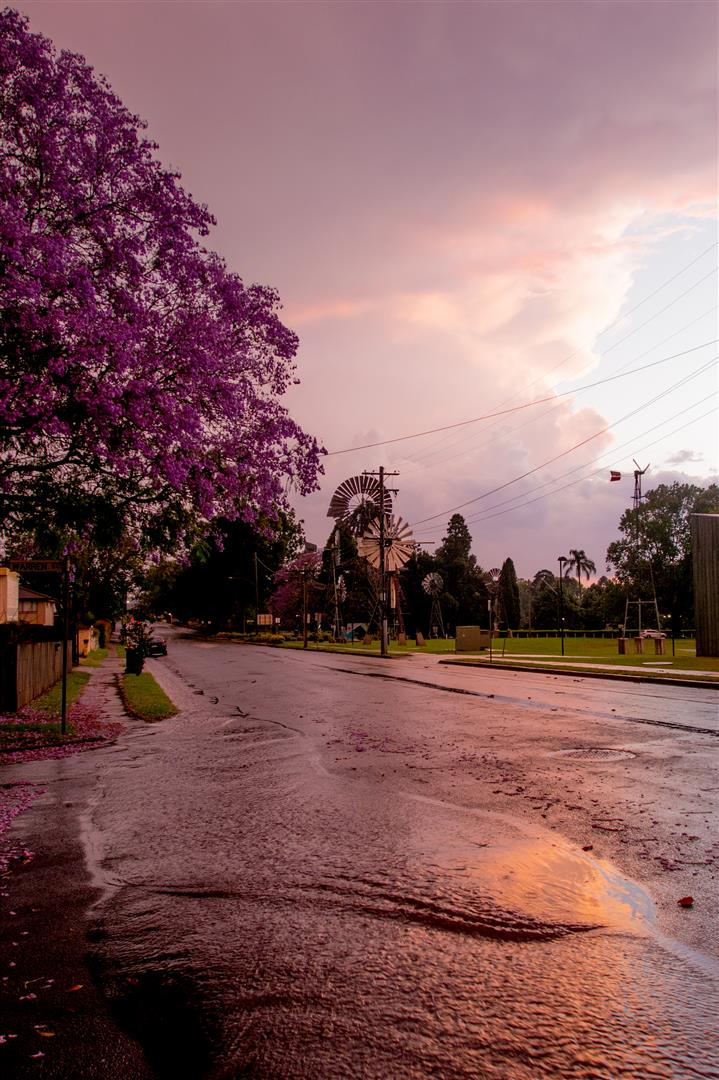
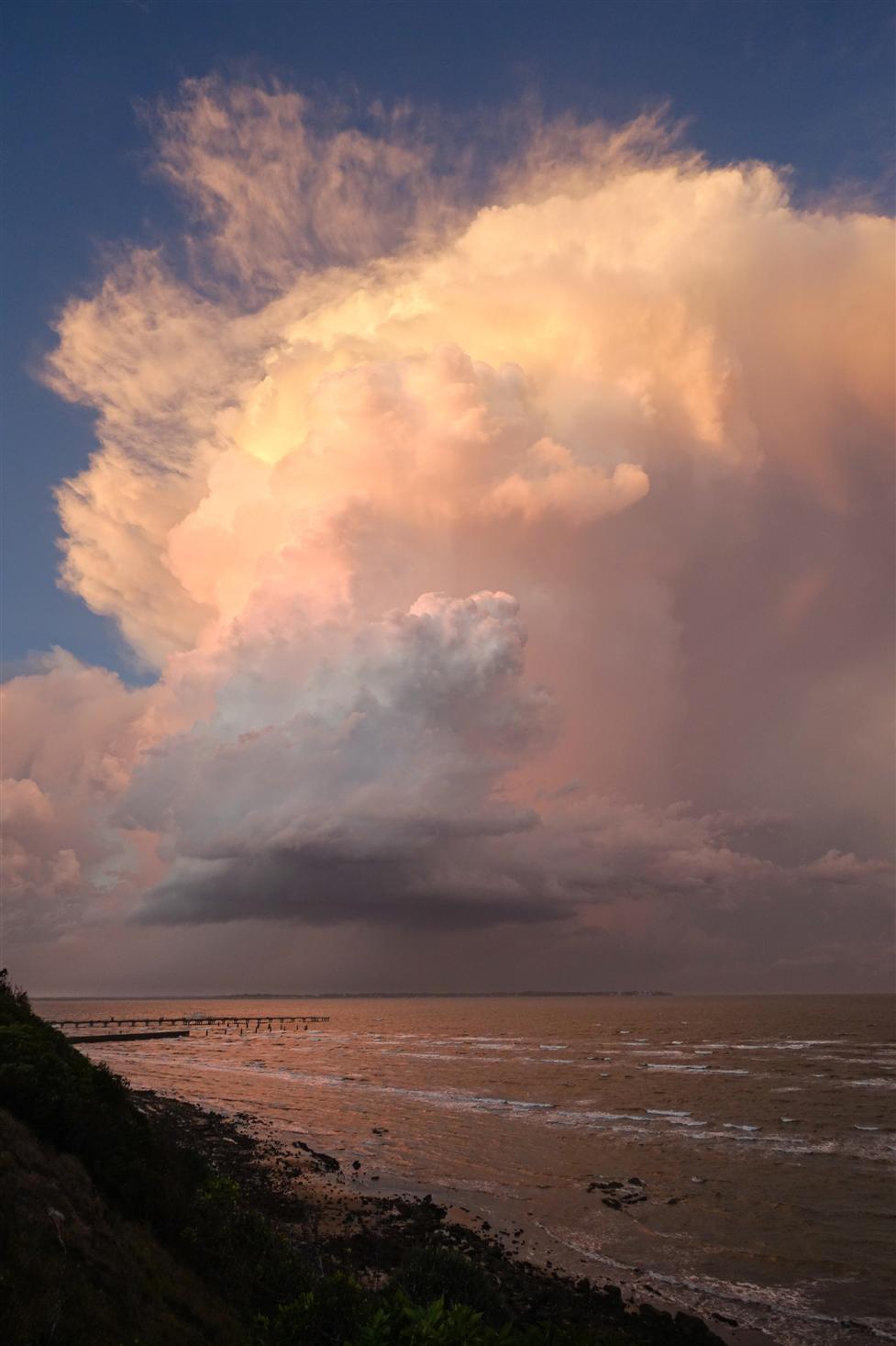
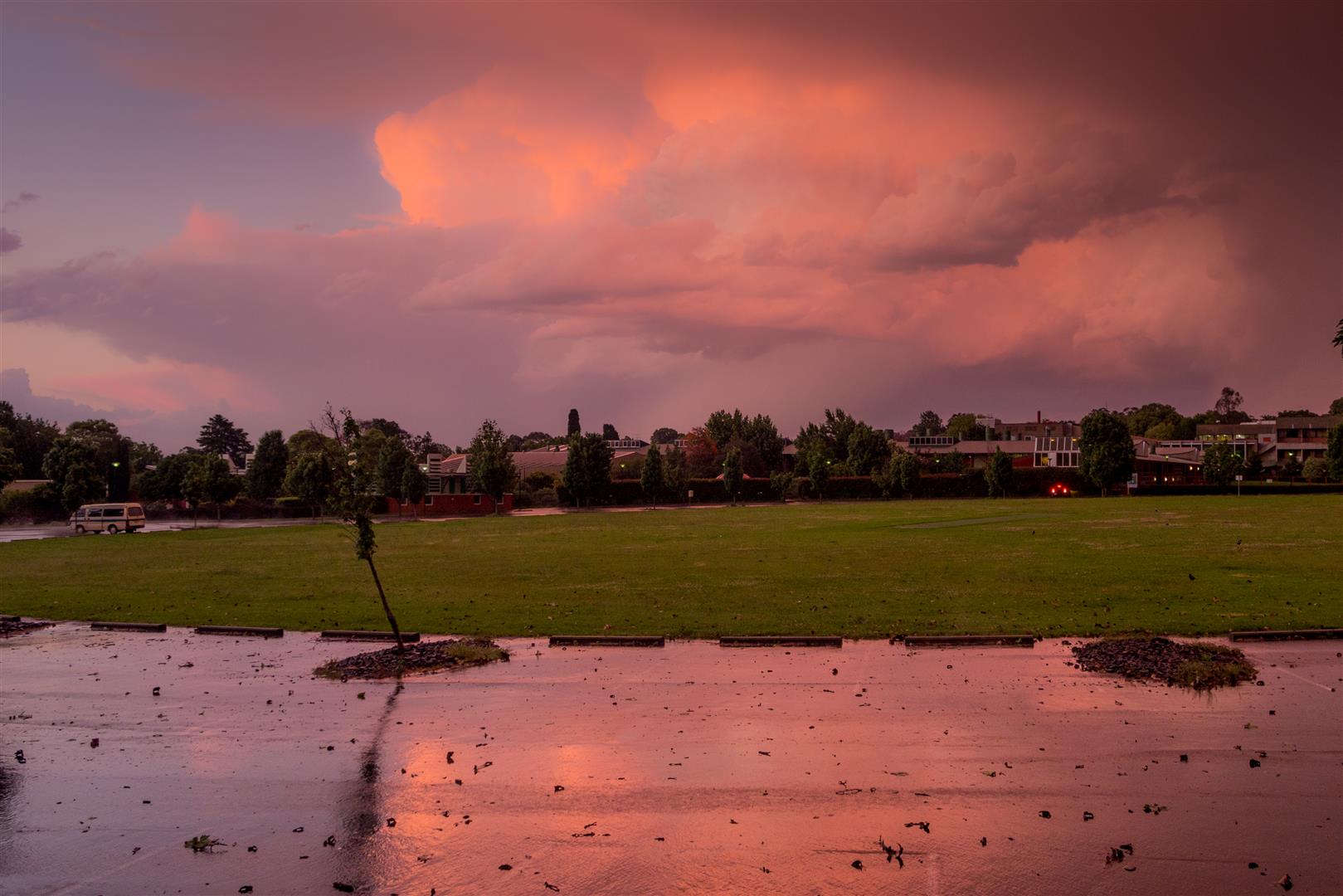
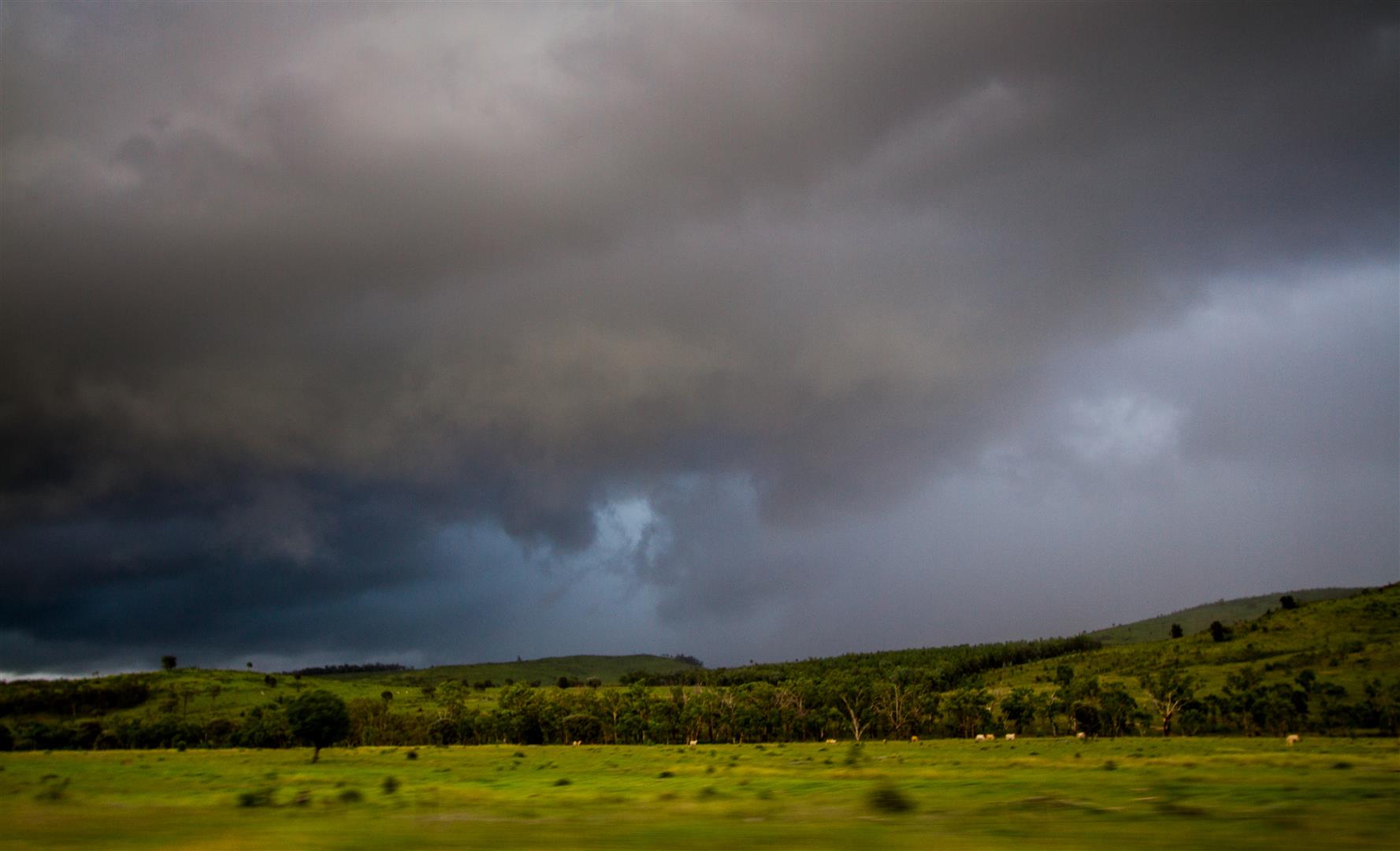
A theme is developing. Maybe. More oxide-coloured images from west and east of the Great Divide. [Click on the images for full-screen view].
Links:
Queensland Parks and Wildlife Service ranger Bryan Phillips-Petersen recently took this photograph of a Tiger Snake (Notechis scutatis) on a track at Bunya Mountains National Park.

Tiger Snake, Bunya Mountains National Park. Growing to a length of two metres, this is a large, highly venomous member of the Elapid family of snakes. This species varies in colour throughout Australia, but usually they have ragged-edged pale bands (hence the common name). In Queensland they are found in some upland rainforest areas and in some coastal lowland parts of the Sunshine Coast. They feed mainly on frogs. The flattened head is a warning to stay well clear. Photo courtesy Bryan Phillips-Petersen.
It’s a beautiful reptile — a species that I’ve kept an eye out for at the Bunyas during visits over many years, with only one brief sighting that gave no chance for a photo.
Given its fierce look and common name, this is a snake that might invoke thoughts of an aggressive, attacking reptile. However, while this is a dangerously venomous snake responsible for fatalities, its reputation as a fierce animal is not deserved, according to herpetologist Steve Wilson:
The Tiger Snake has an undeserved reputation as being very aggressive, yet it is quite a timid snake that avoids confrontation. Very large individuals are often quite unconcerned by the presence of people. Even when provoked they give plenty of warning with an impressive threat display, flattening the neck and forebody and hissing loudly. Only as a last resort will the snake strike, but given its abundance around southern cities it is not surprising that this highly venomous species is second only to the Eastern Brown Snake as the most common cause of snake-bite death in Australia.*

Rising abruptly from the surrounding plains, the cool peaks of the Bunya Mountains reach more than 1,100 metres above sea level and offer spectacular mountain scenery, views and abundant wildlife. Bunya Mountains National Park (declared in 1908) is Queensland’s second oldest national park. It shelters the world’s largest stand of ancient Bunya Pines (Araucaria bidwillii).The park is home to about 120 species of birds and many species of mammals, frogs and reptiles. Several rare and threatened animals live here, including sooty owls, powerful owls, the black-breasted button quail, a skink species and a number of mammals. Photograph Robert Ashdown.
Once the most common cause of snake-bite death, Tiger Snakes have now been surpassed by Eastern Brown Snakes. It is thought that this change may be due to the difference in favoured prey items. Tiger snakes like to eat frogs, which have declined in numbers in many areas favoured by humans areas due to habitat clearing and other factors. On the other hand mice — the favourite food of brown snakes — have only increased in numbers around humans.
Tiger Snakes are less common in Queensland than in southern parts of Australia, where they are widespread in cool moist areas such as swamp edges and creek banks. In Queensland they are found in upland rainforests such as the McPherson Ranges and the Bunya Mountains. They can also be found in coastal wallum and heath areas of the Sunshine Coast. An isolated population is found in the Mount Moffatt section of Carnarvon National Park.
*Reference: What Snake is That? Gerry Swan and Steve Wilson, 2008.
Links:
Frilly Neck Lizard
when the dinosaurs
were wiped from the earth
you crawled inside
a caveman’s pocket
then re-emerged
in my backyard
flaunting the latest look
in post-medieval
protective neck wear
Or something. Some photos taken on the weekend at Raels and Kim’s rainy front-yard.
Images from guest photographer Raelene Neilson.
A backyard bird bath is a win-win — the birds will visit and the bird-fan will welcome each visitor. The only problem is how much time can a bird-watcher sit and watch before other things call? The simple things in life can be the best indeed.
Here is a selection of images taken by Raelene at her ground level bird-bath at Geham, north of Toowoomba.
While the impact of development on our coastal habitats is a topic constantly in the news, it’s sobering to be reminded that we are still finding out what species of plants and animals actually live in these fragile places.

Cherax austini, one of two recently described species of freshwater crayfish from Whitsunday Island. Preserved specimen, photo R. Ashdown.
For zoologists, the discovery of a new species is always significant. It’s like finding another piece in the threatened and fragile jigsaw of life that surrounds us and on which we depend so much.
The Whitsunday Ngaro Sea Trail is a mix of seaways and picturesque walks across Whitsunday, South Molle and Hook islands. The walk leads through open forests, grasslands and rainforest, and includes climbs up rugged peaks and strolls along winding pathways.
Created by the Queensland Parks and Wildlife Service (QPWS), the walking tracks and other infrastructure associated with the Sea Trail were yet more ‘development’. So, before this project was completed, a careful analysis of any associated impacts was carried out, to make sure they’d be kept as small as possible. As a part of that process, new surveys of the fauna and flora of Whitsunday Island were completed.
In 2010, while undertaking one of these surveys, QPWS employees Rod Hobson and Richard Johnson discovered the remains of a freshwater crayfish Cherax sp. These were forwarded to crayfish researcher Jason Coughran for comment. Jason recognised these remains to be those of a yet undescribed species. A return trip was arranged to collect live specimens for description, which was duly accomplished later that year. During this trip a second species of freshwater crayfish was also found on the island.

Rod Hobson and Richard Johnson in pursuit of an interesting reptile on a QPWS fauna survey, Yelarbon, 2006. Photo R. Ashdown.
These crustaceans have now been formally recognised as two new species — Cherax austini sp. n. Coughran & Hobson and Cherax cid sp. n. Dawkins & Furse (Coughran et al 2012).

Cherax austini (left) and Cherax cid (right). These specimens are the holotypes of the two new species, stored permanently in the collections of the Queensland Museum. The museum’s zoological collections represent the ever-growing and priceless database of Queensland’s faunal diversity. [A holotype is the actual physical specimen of an organism that was used when the species was officially described]. Photo courtesy Queensland Museum.

The Swamp Crayfish (Tenibranchiurus glypticus), at about 2.5 cm in length, is one of the world’s smallest freshwater crayfish. Thorneside, Brisbane. Photo R. Ashdown.
Queensland species belong to three genera: Cherax (smooth freshwater crayfish or freshwater yabbies); Euastacus (spiny freshwater crayfish) and Tenuibranchiurus (swamp crayfish).
According to the authors of the paper on these two new Cherax species, there is no information on any other species of freshwater crayfish inhabiting islands this far north in the Coral Sea, apart from a single specimen of the Orange-fingered Yabby Cherax depressus collected at Lindemann Island about 12 km south of Whitsunday Island. The next closest island species is the Sand Yabby Cherax robustus, found on Fraser Island, about 700 km south. Interestingly, Cherax austini displays a feature (a median ridge on the cephalon) that is associated with crayfish in the extreme south-west of Western Australia (Coughran et al 2012).
The results of genetic work on the two new species, however, show that they are related to the mainland Cherax depressus group of yabbies, but as with island species of all types, they are busy evolving down their own divergent paths.

An Orange-fingered Yabby (Cherax depressus), roaming around a walking track like a small armoured tank after heavy rain at Lota, Brisbane. Photo R. Ashdown.

Euastacus suttoni, a colourful member of the spiny crayfish group, strikes a defensive pose as the terrifying photographer approaches. Bald Rock National Park, New South Wales. Photo R. Ashdown.
While probably confined to Whitsunday Island, the discovery of these two new species highlights the importance of continuing surveys on other Coral Sea Islands. There aren’t many suitable wetlands on Whitsunday Island, so checking out ephemeral wetlands and drainages on other islands in the group may just reveal further new creatures.
When species are restricted to islands, careful management is needed, as they are potentially vulnerable to various human-induced and naturally-occuring impacts. The value of national parks for protecting biodiversity is once again underlined. Cherax austini was discovered in a single Melaleuca (paperbark) swamp, a particular type of habitat that is classified as an “endangered” Regional Ecosystem. This particular location is one of only four protected areas of this habitat type in Queensland. The specimen was first detected as shell remains in midden formations around the shoreline of the swamp, probably from a predator such as an Eastern Water Rat.
Cherax cid was found in a small, clear flowing stream within notophyll vine forest, a type of coastal rainforest scrub. The specific type of Regional Ecosystem that this locality fell within is found only within six protected areas in Queensland.
The discovery of new species of such well-known creatures as yabbies is a pleasant surprise. It’s a find that once more increases our understanding of the the size and beauty of Australia’s biological diversity — our irreplaceable natural heritage.

The Common yabby (Cherax destructor), a well-known (and dined-upon) crustacean of the Australian west. Lake Broadwater Conservation Park, near Dalby, Darling Downs. Photo R. Ashdown.
*The large and the small (from Rod Hobson, 7/4/2013)
It has long been a matter of Aussie pride among those of us interested in our freshwater crayfish (from perspectives other than gastronomic) that we have both the largest and smallest freshwater yabby in the world. Whilst there is no argument whatsoever about our having the largest our contention that we also have the smallest is hotly contested by our friends from under The Star Spangled Banner. Our local contender is the Swamp Crayfish Tenuibranchiurus glypticus, which is a Wallum denizen of south-east Queensland reaching a grandiose length of 25 mm. South of the Mason-Dixon in the Deep South of the USA the flyweight belt is claimed by the Dwarf Crayfish Cambarellus diminutus. The Dwarf Crayfish is one of 17 species of freshwater crayfish of the family Cambaridae found in Mexico and the Gulf States of the USA. This family are all generally known en masse as dwarf crayfish, or more likely as crawdads or craybobs. Crawdad and craybob have also been absorbed into the Australian vernacular for our freshwater yabbies but are actually American terms. We owe a lot to The Beverly Hillbillies.
Cambarellus diminutus is a rare and threatened species known only from about 15 locations in Mobile County, Alabama and Jackson and George Counties in Mississippi. This crawdad also reaches an upper length of 25 mm so it’s actually a photofinish for the title of the world’s smallest crayfish. It’s a tie and we cannot, in all fairness, claim our crustacean, as the world’s smallest yabby. We still, however have a “no contest” for the world’s largest in the Tasmanian Giant Crayfish Astacopsis gouldi tipping the scales at 5 kilograms wringing wet and attaining a length of 80 cms. In fact not only is Astacopsis the world’s largest freshwater crayfish it is actually the world’s largest freshwater invertebrate. Let’s see someone beat that one!
Reference:
Coughran Jason, Dawkins Kathryn L., Hobson Rod and Furse James M., 2012. ‘Two new freshwater crayfishes (Decapoda: Parastacidae) from Whitsunday Island, The Coral Sea, Australia’ in Crustacean Research, Special Number 7, 45-51, 2012.
Links
Some more great images by guest photographer Mike Peisley.
These images were all taken in and around the wetlands and coastal areas of the Brisbane bayside areas of Boondall and Shorncliffe. Mike’s patience, observation skills and technical prowess have seen him capture images overflowing with the subjects’ personality.
Some wonderful images of Yellow-tailed Black Cockatoos enjoying Banksia seeds. Taken by Liz Naumann in her front-yard using a point-and-shoot camera!
A recent work trip to Roma. How had I missed all these Brachychitons on previous trips? Hard to fathom. Here are some of them. OK, no more.
Queensland is still counting the cost of ‘ex-Tropical Cyclone Oswald’, with major flooding and damage to property and infrastructure right down the east coast.
Humans were not the only species affected, with seabirds being blown far from home by the wild weather during January 2013.

Black Noddy, photographed at Shorncliffe by Mike Peisley. Blown off course by Cyclone Oswald, this is a bird usually found on islands and cays, including the Capricorn and Bunker groups, the Great Barrier Reef, Norfolk Island and the Coral Sea. It’s a species that occasionally visits Stradbroke Island and eastern New South Wales.
In the Darling Downs area, a range of unusual species were recorded. Birds either seen flying or found exhausted included Wedge-tailed Shearwaters, Sooty Terns, White-tailed Tropicbirds, Frigatebirds and a Bulwer’s Petrel. The latter was a very interesting record — although there have been several confirmed sightings of Bulwer’s Petrels in Queensland over the years, this was the first specimen of this species obtained for the State, and only the second specimen for Australia.

White-tailed Tropicbird, found in Toowoomba — a long way from ‘home’. This is a true ocean-going bird (pelagic), only coming ashore to breed. For eastern Australian birds, breeding takes place at Fiji – New Caledonia and the Tuamotu and Walpole islands. Photograph courtesy Mick Atzeni.
Toowoomba Bird Observers (TBO) president Mick Atzeni has been collecting records of the unusual sightings, adding to the group’s extensive database on the birds of the Toowoomba region.
“To see seabirds flying around paddocks and over local dams was a once-in-a-lifetime opportunity for most people,” said Mick. “It was bitter-sweet, because these birds were starving, exhausted, and lost.”
Wildlife carer Trish LeeHong cared for some of the exhausted birds, which stretched the resources of her always-busy and not-for-profit Wildlife Rescue, Rehabilitation and Education Association. Several were restored to health and released at Deception Bay.

Wedge-tailed Shearwater, Toowoomba. The common ‘muttonbird’ of Queensland’s warmer coastal waters, responsible for the wailing, crooning sounds often heard at night on Great Barrier Reef islands (but usually not in the Toowoomba suburbs). Photograph courtesy Pat McConnell.
Mick reported that dead Sooty Terns were found in the middle of Toowoomba, at the Murphys Creek township and at Lockyer Siding, while a Wedge-tailed Shearwater was found in James Street near Clifford Gardens, Toowoomba. Exhausted White-tailed Tropicbirds were found at Meringandan and Withcott, while Sooty Terns and a Wedge-tailed Shearwater were seen flying over the Lockyer Valley by TBO members.

Adult Sooty Tern, Toowoomba. Also known as ‘Wideawake’, the Sooty Tern’s habitat is tropical and sub-tropical seas as well as islands and coral cays. Photograph courtesy Mick Atzeni.
“Wedge-tailed Shearwater and White-tailed Tropicbird are new birds for the official TBO bird list,” said Mick. “This was our first live record for Sooty Terns in the area we survey, as the only previous record was a dead one found on the Range Highway in 1976 (during a previous cyclone).”
The body of the Bulwer’s Petrel, which unfortunately died soon after being found, was lodged with the Queensland Museum at Southbank, where its identity was confirmed. Stored as part of the Museum’s natural history collections, the specimen will be valuable for future studies.

Bulwer’s Petrel, collected at the Oakey Army Base, on the Darling Downs. This small, sooty-brown seabird is found in tropical and sub-tropical waters around the world. Usually a solitary bird when at sea, this species gathers to breed on islands in the Pacific and north Atlantic oceans. Bulwer’s Petrels have only been sighted in Australian waters on several occasions. Photo R. Ashdown.
Ian Gynther, Senior Conservation Officer with the Department of Environment and Heritage Protection, spoke to the ABC about the Bulwer’s Petrel. “It’s only a tiny thing. When they’re not breeding they spend their whole life at sea — you could imagine the waves and wind they put up with at the best of times.”
“This is a prime example of how our knowledge of a bird that’s seldom recorded has been greatly increased by somebody with sharp eyes at Oakey,” said Ian.

Black Noddy on the wing at Shorncliffe — grace, style and frequent flyer points. Photograph courtesy Mike Peisley.

Hmmm … maybe not so much grace, but a survivor nonetheless. Storm-battered Torresian Crow, Shorncliffe. Photo courtesy Mike Peisley.
Thanks to Mick Atzeni, Mike Peisley, James Hunt, Pat McConnell and Rod Hobson.
Tropical Cyclone Oswald hit the coast of Queensland in January 2013 and headed south as an “ex-tropical cyclone”, causing havoc and heartache for a considerable length of time.
Three images sent to me by artist Adrienne Williams once again reminded me of the power of water at such times. Adrienne lives at Mount Perry, south-west of Bundaberg — an area hit particularly hard by wind and rain.

These photos show the minor pot-holes created in the three roads linking Adrienne’s home to the rest of the world after ‘ex-cyclone’ Oswald passed by. They received 600 mm of rain in 72 hours. That’s Sunday, the ’50% Lab 50% Rotti’ casting a cool eye over the scene. All photos courtesy (and copyright) Adrienne Williams.
It’s difficult to find one site on the web that gives an overview of the history and impact of this particular cyclone. It’s just all too big. The strength of nature when things gets fired up is expressed instead at a local level in images like these from Adrienne.
The Australian Bureau of Meteorology (BOM) website states that “Although the considerable majority of cyclone impacts are located in north Queensland, occasionally a cyclone affects areas further south down the east coast.” Oswald certainly fell into that category, even reaching Sydney eventually.
If you’re after some great stuff on cyclones, the BOM site has a stack of fascinating information on these things in Australia, including the following snippets on Queensland cyclones:
Some of Adrienne’s beautiful artwork can be seen at www.adriennewilliams.com
Stanthorpe shed, January, 2013.
Most working days I walk through Queens Park on my way to and from town, passing a beautiful Queensland Bottle Tree (Brachychiton rupestris).
I ended 2012 by taking some extended leave, and each morning I walked the little black dog through the park, gradually slowing down and looking around instead of rushing to work.
While I’m a bigger fan of wild areas, there are always things to discover in parks. The more I looked at this tree, the more I saw and liked. Walkers, dogs, joggers ands cyclists pass directly under its canopy, lost in their thoughts and usually oblivious to its charms.
Over the next three months I kept looking, photographing it with whatever I had on hand. Not knowing anything about Brachychitons I was concerned when it shed most of its leaves in the hot, dry October/November weeks, thinking it was drought stressed.
However, a bloom of new orange and pink foliage belayed my fears. I found out later that this is a characteristic of these trees — they often do this before flowering, and they can also shed leaves to conserve moisture during prolonged drought.

Queensland Bottle Trees often shed their leaves before flowering, or during drought times. New growth is a beautiful pink colour.
Also known as the Narrow-leaved Bottle Tree, this is one of 31 species of Brachychiton, with 30 found in Australia and one species in New Guinea. The common name “bottle tree” refers to the characteristic trunk of the tree, which can reach up to seven metres in circumference. Fossils from New South Wales and New Zealand have been dated at 50 million years old.

Pale-headed Rosellas seem to enjoy chewing the bark of bottle trees. A pair regularly hang out quietly in the tree.

Midday, and bloody hot! A distinguishing feature of this particular tree is a water-mark that runs down one side. These trees do not store reservoirs of water, but their interior is made of a spongy, fibrous material that holds moisture. Photo by Harry Ashdown.

Sometimes, despite there being no rain for days, moisture seeps down the water-mark. Maybe early morning condensation moving down branches?
Queensland Bottle Trees are endemic to a limited region of Australia — Central Queensland through to northern New South Wales. In 1845 the explorer Thomas Mitchell led an expedition seeking an overland route from Sydney to the Gulf of Carpentaria. He ran into these trees on his journey, within the brigalow (Acacia harpophylla) scrub that covered much of central Queensland. Mitchell found some trees so wide that a horse standing side on was said to disappear from view. This tree would be the saviour of many early squatters.
The Bottle Tree’s most striking characteristic was that its trunk was not made of sapwood like ordinary trees, but rather consisted of a spongy fibre, which was also filled with moisture. In times of drought, settlers would cut down bottle trees and peel off the bark — exposing the fleshy fibre, which cattle would eat. A large tree could satisfy a hungry, thirsty herd for weeks.
Indigenous peoples of course knew the value of this tree, carving holes into the soft bark to create reservoir-like structures, and the seeds, roots, stems, and bark have all been a source of food for people and animals alike long before white settlers arrived. The fibrous inner bark was used to make twine or rope and even woven together to make fishing nets.

Bottle tree seed-pods, Auburn River National Park. This is a close-relative, the Broad-leaved Bottle Tree (Brachychiton australis).
Deemed a ‘useful’ tree, bottle trees were often left by settlers when they were clearing land. Today, solitary specimens are often seen in fields. To me they are reminders of times not so long ago when vast areas of central Queensland were covered in scrub.
In the brigalow-dominated landscape of the Queensland bio-region known as the Brigalow Belt, Queensland Bottle Trees were found within pockets of ‘softwood scrub’ — or ‘semi-evergreen vine thicket’, a type of scrubby, dry rainforest. These ecosystems show some of the characteristics associated with the wetter tropical type of rainforest but are less luxuriant, lacking species such as tree ferns, palms and epiphytes. They also have a reduced canopy height and are simpler in structure.

A Brachychiton stands out amongst the silver foliage of Brigalow (Acacia harpophylla). Arcadia Valley, central Queensland.

Queensland Bottle Trees are lit by the afternoon sun within remnant softwood scrub, Auburn River National Park.

Down at ground level within softwood scrub at Isla Gorge National Park (the trunk of a bottle tree is on the right). The technical term for these scrubs is ‘semi-evergreen vine thicket’.
Adaptations found in these forests to drier environments include smaller, thicker leaves, swollen roots and stems, and an (optional) deciduous habit — meaning that plants can preserve moisture by losing their leaves in times of extreme drought.

The same location — a Broad-leaved Bottle Tree in its original habitat. A tad wilder, and a lot more interesting, than Queens Park.
Since white settlement approximately 83 percent of this type of ecosystem has been cleared, and the remaining patches are classified as endangered ecological communities.
About 20 percent of the remaining patches are found in protected areas, such as Cania Gorge, Carnarvon, Bunya Mountains and Expedition national parks. I’ve spent some magic hours walking within these remaining patches of softwood scrub, and it’s always exciting to come across a large bottle tree within its original habitat.
Bottle Trees are also sought-after ornamentals, and line the streets of towns from Brisbane to Roma.
My solitary Queens Park tree, looking down onto Toowoomba’s central business district, seems odd and out of place to me in this cultivated landscape — a strange, silent, and somewhat troubling reminder of wild times past, when tangles of un-tamed vine scrub ruled much of the land now civilised and ordered by farms and towns.

January 27, 2013. Ex-tropical cyclone Oswald works its way down the east coast, bringing heavy rain and winds, and soaking ground for thirsty trees.